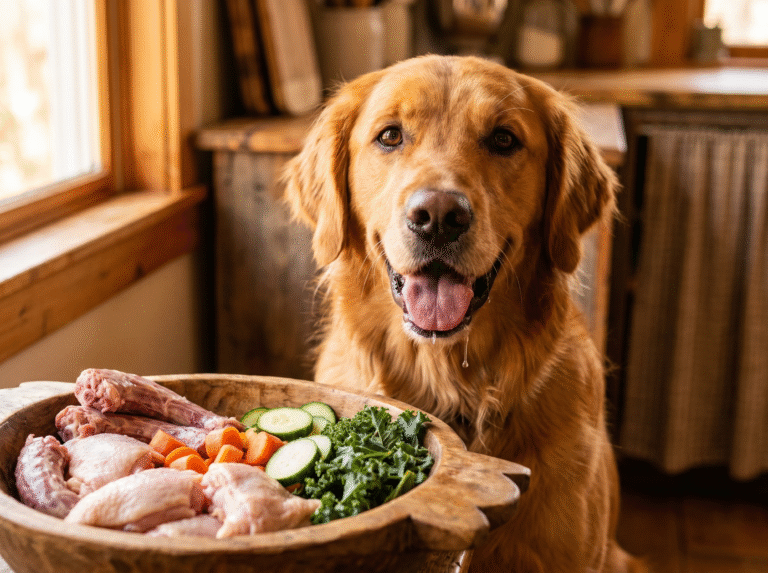
Most dog owners don’t suddenly decide to switch their pet’s diet overnight. It usually starts with a small concern that doesn’t quite go away. Maybe your dog has been scratching more than usual, or their coat has lost its shine. Sometimes it’s digestive issues, inconsistent stools, or just a feeling that something isn’t quite right. And then, like most people do today, you start reading ingredient labels, only to realize you don’t fully recognize what’s actually in your dog’s food.
That’s often the moment the idea of raw feeding enters the conversation.
But it doesn’t take long before another, more practical question follows: is raw dog food worth the cost?
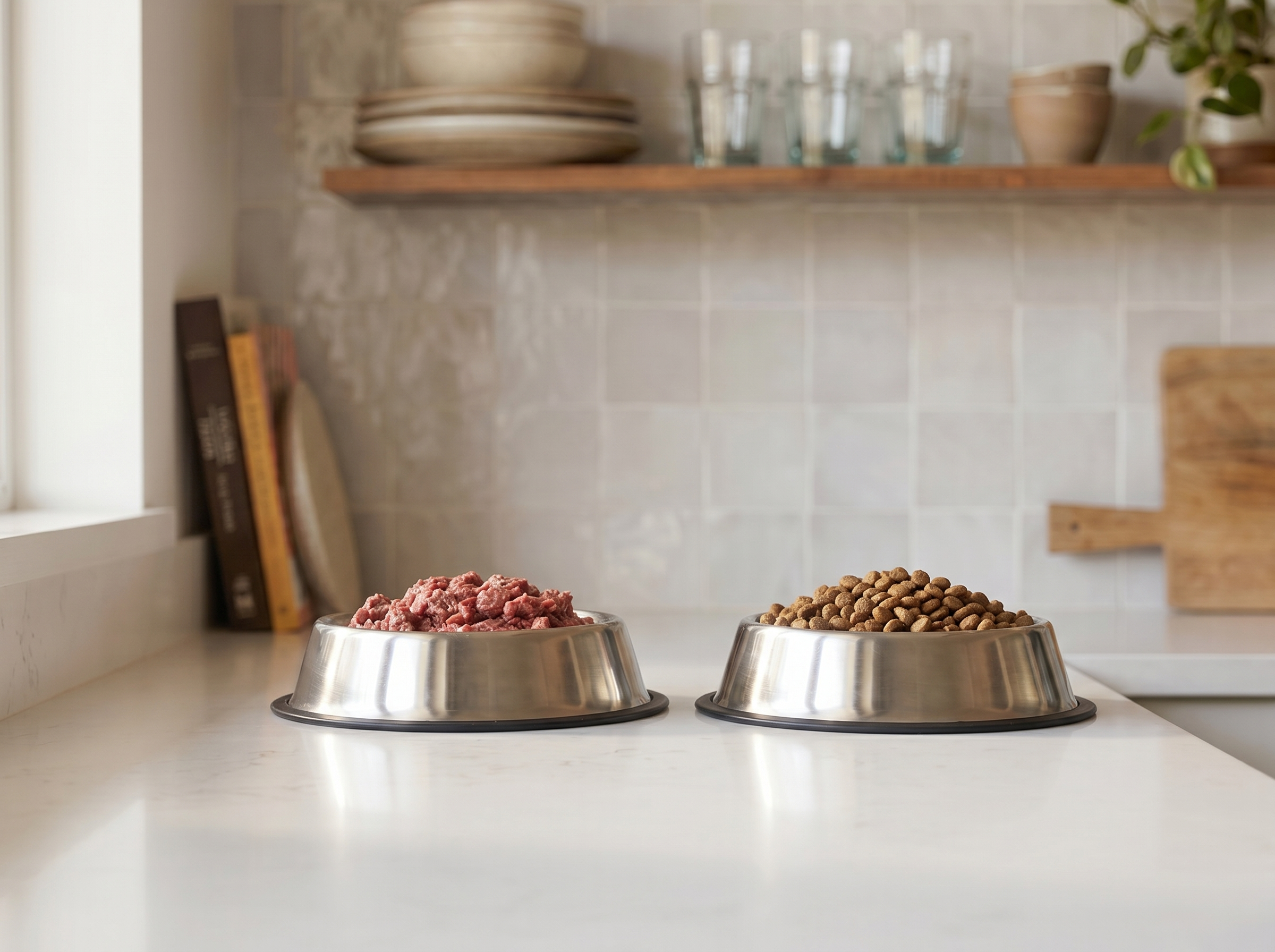
There’s no avoiding the reality that raw dog food is more expensive than traditional kibble. For many households, that alone is enough to hesitate. However, looking at price alone doesn’t tell the full story. To properly answer whether raw dog food is worth it, you need to look beyond the upfront cost and understand what you’re actually paying for, and what you will likely gain in return.
At its core, a raw dog food diet is built around whole, minimally processed ingredients. Instead of heavily manufactured pellets, raw meals typically consist of real muscle meat, organs, and bone, sometimes combined with vegetables or supplements depending on the formulation. The goal is to provide a diet that is closer to what a dog would naturally consume, rather than one that has been altered for shelf stability and mass production.
This difference in composition is a big part of why raw dog food costs more. High-quality protein sources, careful sourcing, and cold-chain storage all contribute to the price. On average, feeding a dog raw can range anywhere from a few dollars a day for smaller breeds to significantly more for larger dogs. Compared to kibble, which can cost a fraction of that per meal, the gap feels substantial.
But the comparison isn’t entirely fair. Kibble and raw dog food may both serve the same purpose feeding your dog, but they are fundamentally different products.
One of the main arguments in favor of raw feeding lies in how dogs process their food. Raw diets tend to be more digestible, meaning dogs are able to absorb a higher percentage of the nutrients they consume. Many pet owners notice this almost immediately through smaller, firmer stools and less waste overall. It’s a subtle but telling sign that the body is using more of what it’s being given.
Beyond digestion, there are other commonly reported benefits. Dogs on raw diets often develop healthier skin and shinier coats, likely due to the natural fats and absence of artificial additives. Energy levels can become more stable, without the spikes and crashes sometimes associated with carbohydrate-heavy diets. Even dental health can improve, particularly when raw meaty bones are part of the routine, helping to reduce plaque buildup in a more natural way.
For dogs with sensitivities or allergies, the impact can be even more noticeable. Many commercial dog foods contain grains, fillers, and preservatives that don’t sit well with every animal. By simplifying the ingredient list and removing many of these triggers, a raw diet can help reduce inflammation, itching, and other chronic issues.
This is where the conversation shifts from cost to value.
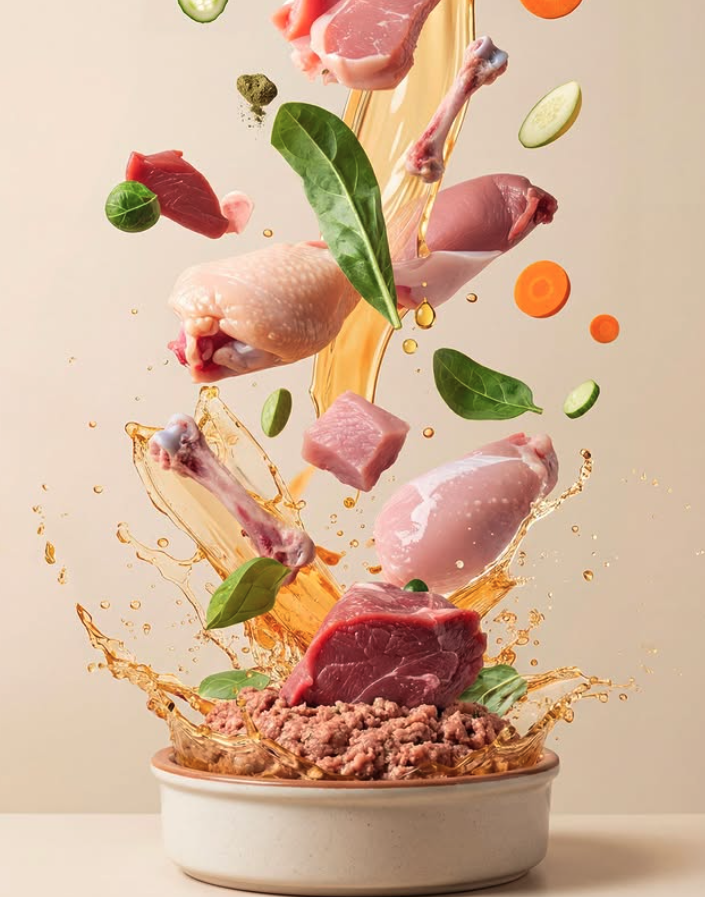
While raw dog food requires a higher investment upfront, it may help reduce other expenses over time. Healthier dogs tend to need fewer vet visits, fewer medications, and less intervention for chronic conditions. Preventative care, in this sense, begins with nutrition. Although there are no guarantees, many owners find that investing in better food leads to fewer health-related costs down the line.
Of course, cost isn’t the only factor to consider. Convenience plays a significant role as well. Feeding raw requires a level of planning and consistency that kibble simply doesn’t. Meals often need to be stored in a freezer, thawed in advance, and portioned correctly. There’s also an element of food safety to keep in mind when handling raw meat.
For some people, this becomes part of a routine fairly quickly. For others, it can feel like an added layer of complexity that doesn’t fit easily into their lifestyle. This is an important consideration, because consistency matters. A well-balanced diet, raw or otherwise, only works if it’s followed properly.
It’s also worth noting that raw feeding doesn’t have to be an all-or-nothing decision. Many dog owners choose a more flexible approach, incorporating raw food as a supplement rather than a complete replacement. Adding raw toppers to kibble, rotating between feeding styles, or using freeze-dried raw options can provide some of the benefits without fully committing to the cost or routine of a 100% raw diet.
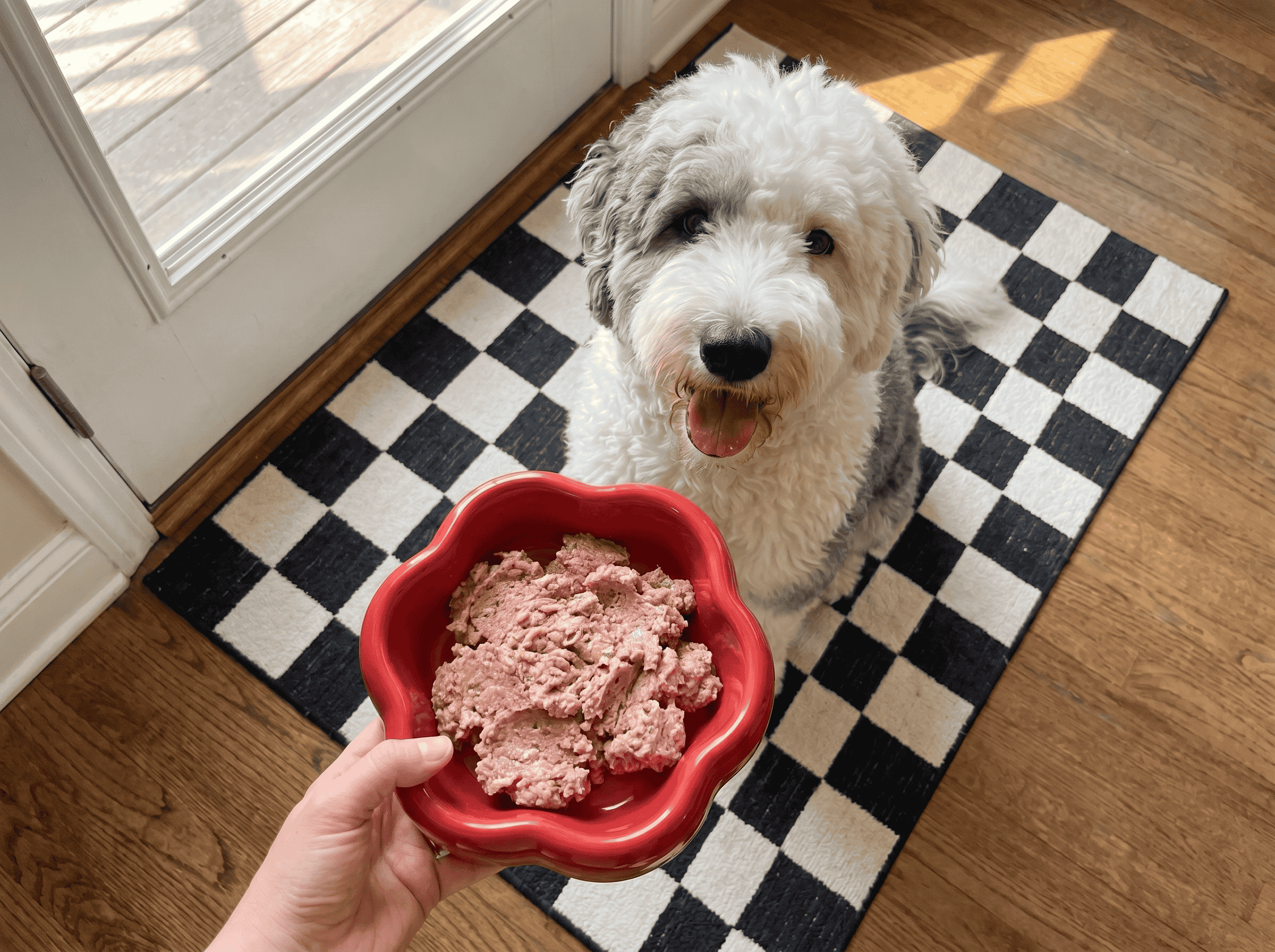
This kind of hybrid approach often makes the transition more manageable, both financially and practically.
So, is raw dog food worth the cost?
The answer depends largely on what you value and what you’re looking to achieve. If the goal is simply to minimize monthly expenses, kibble will almost always come out ahead. But if the focus is on ingredient quality, long-term health, and providing a more natural diet, then raw feeding begins to make a stronger case.
For many dog owners, the decision ultimately comes down to perspective. Food is something a dog consumes every single day, and it plays a central role in their overall health and well-being. When viewed through that lens, the cost becomes less about the price per meal and more about the impact over time.
There’s also a growing number of options available today that make raw feeding more accessible than it once was. Pre-portioned, ready-to-serve meals remove much of the guesswork, allowing owners to provide a balanced raw diet without needing to build it from scratch. In Canada, products like Raw Pack, available at select Costco locations, offer a convenient way to explore raw feeding with formulations designed to meet nutritional standards while maintaining the integrity of whole ingredients.
In the end, switching to raw dog food isn’t about following a trend or making a drastic change for the sake of it. It’s about making an informed decision based on your dog’s needs, your lifestyle, and what you believe is the best long-term approach to their health.
For some, it will absolutely be worth the investment. For others, a different approach may make more sense.
But either way, the question itself is a good one to ask, because it means you’re paying attention to what really matters.